
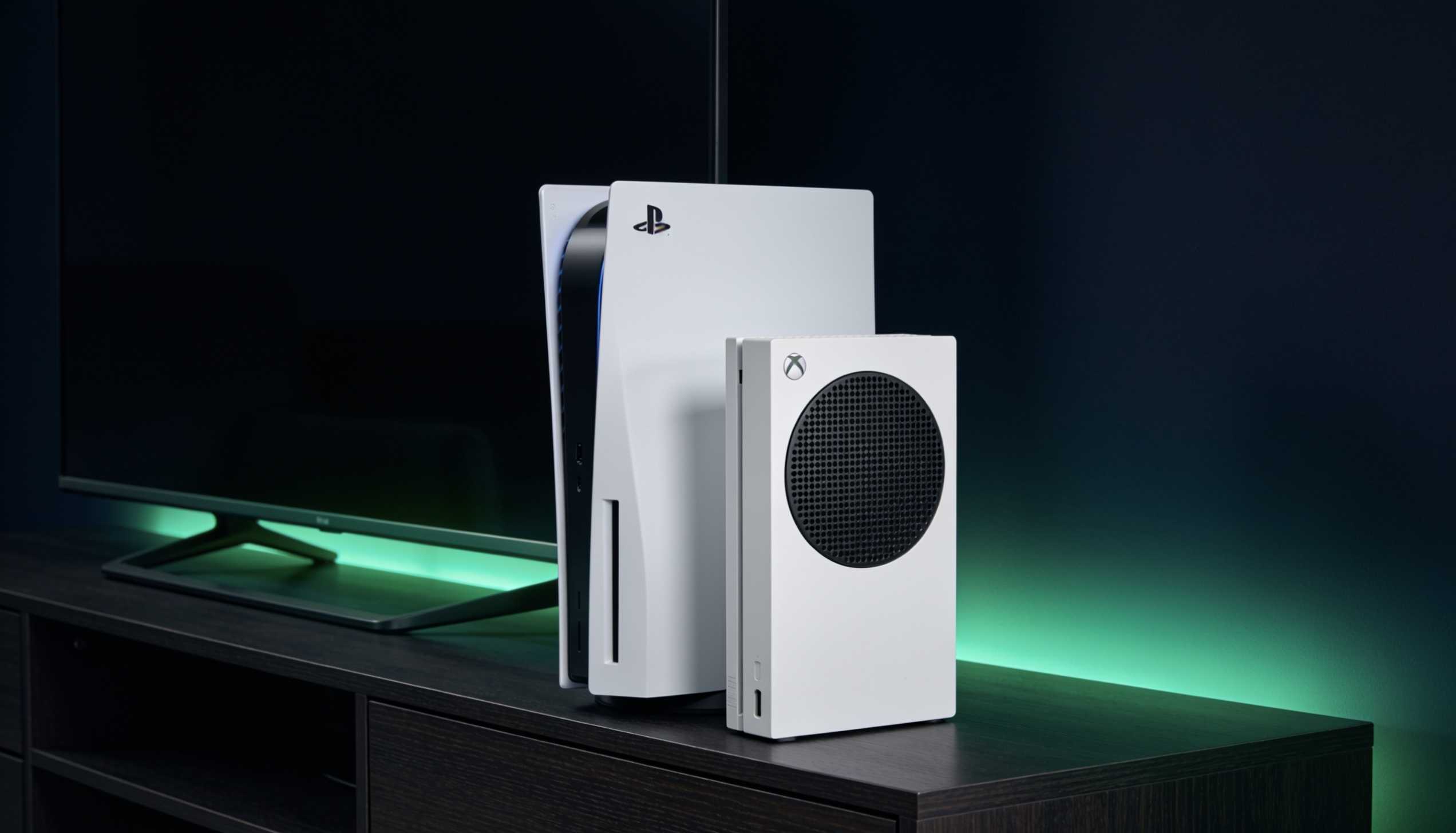
Most PS5 vs Xbox Series S comparisons are written by someone with a spec sheet open in another tab. This one is written from a TV cabinet where both consoles sit plugged in, plus an Xbox One S retired to the bedroom that keeps this whole comparison honest about what “aging hardware” actually means.
The spec-sheet answer is easy: the PS5 is more console. It’s also nearly twice the money in India, and for a specific kind of player that money buys almost nothing they’d notice. So the real question isn’t which console is better. It’s which player you are.
THE VERDICT
Buy the PS5 if you play on a 4K TV, care about exclusives, or resell your games. Buy the Series S if you play on a 1080p or 1440p screen and want the widest library for the least money, powered by Game Pass. Owning both, the one that gets switched on more often is the one whose game I’m currently into. That’s the honest tiebreaker: the games, not the box.
TESTED ON
- Hardware owned: PS5 (disc) · Xbox Series S 512GB · Xbox One S (for the upgrade-path reality check)
- Usage: both current-gen consoles in weekly rotation on the same TV, including PUBG: Battlegrounds on console
- Prices checked: July 2026, India (MRP and street) and US where noted
PS5 vs Xbox Series S at a glance
The short table, before the opinions. Numbers are India, July 2026.
| PS5 (Slim) | Xbox Series S | |
|---|---|---|
| Official price (India) | ₹54,990 disc · ₹44,990 digital | ₹34,990 MRP (512GB), but street prices swing hard; see below |
| Resolution target | Native 4K | 1440p, upscaled output to 4K TVs |
| Storage you can use | ~667GB of 825GB (Slim: 1TB tier ~848GB) | ~364GB of 512GB |
| Disc drive | Yes (disc model) | No, digital only |
| Subscription | PS Plus (catalog, no day-one first-party) | Game Pass (day-one first-party titles) |
| Storage expansion | Standard NVMe M.2 SSD | Proprietary expansion card or licensed USB/CFe options |
| Exclusives | God of War, Spider-Man, Gran Turismo, Ghost of Yotei | Xbox first-party now also ships on other platforms |
What the Series S actually is (and isn’t)
The Series S is a 1440p machine with the same CPU family as the flagship Series X, a fast SSD, and a GPU that’s deliberately about a third as powerful as its big brother. That design choice tells you exactly who it’s for: players on 1080p and 1440p screens, where the missing GPU power mostly can’t be seen.
On my 4K TV, cross-platform games look visibly softer on the Series S than on the PS5 sitting next to it. On a 1080p monitor? The gap nearly disappears, and the Series S suddenly looks like the smartest purchase in gaming. Same box, two different value stories, and your screen decides which one you get.
The catches are real, though. 364GB of usable storage fills up with three or four big games (Call of Duty alone eats a horrifying share of it). Some demanding titles cap at 30fps on the S where the PS5 offers a performance mode. And there’s no disc slot, which in India also means no used-game market and no lending between friends. That last one matters more here than most Western reviews admit.
What the PS5 gets you for the extra ₹20,000
Three things, in order of how much they’ve mattered in actual use.
First, the exclusives. Spider-Man 2, God of War Ragnarok, Gran Turismo 7, Ghost of Yotei… Sony’s first-party catalog remains the strongest argument for the box, and those games are built to show off on it. Xbox’s answer changed shape entirely: Microsoft now ships its big first-party titles on PS5 too, which quietly strengthens the PS5’s case in 2026. The green console’s exclusives argument mostly evaporated; the blue one’s didn’t.
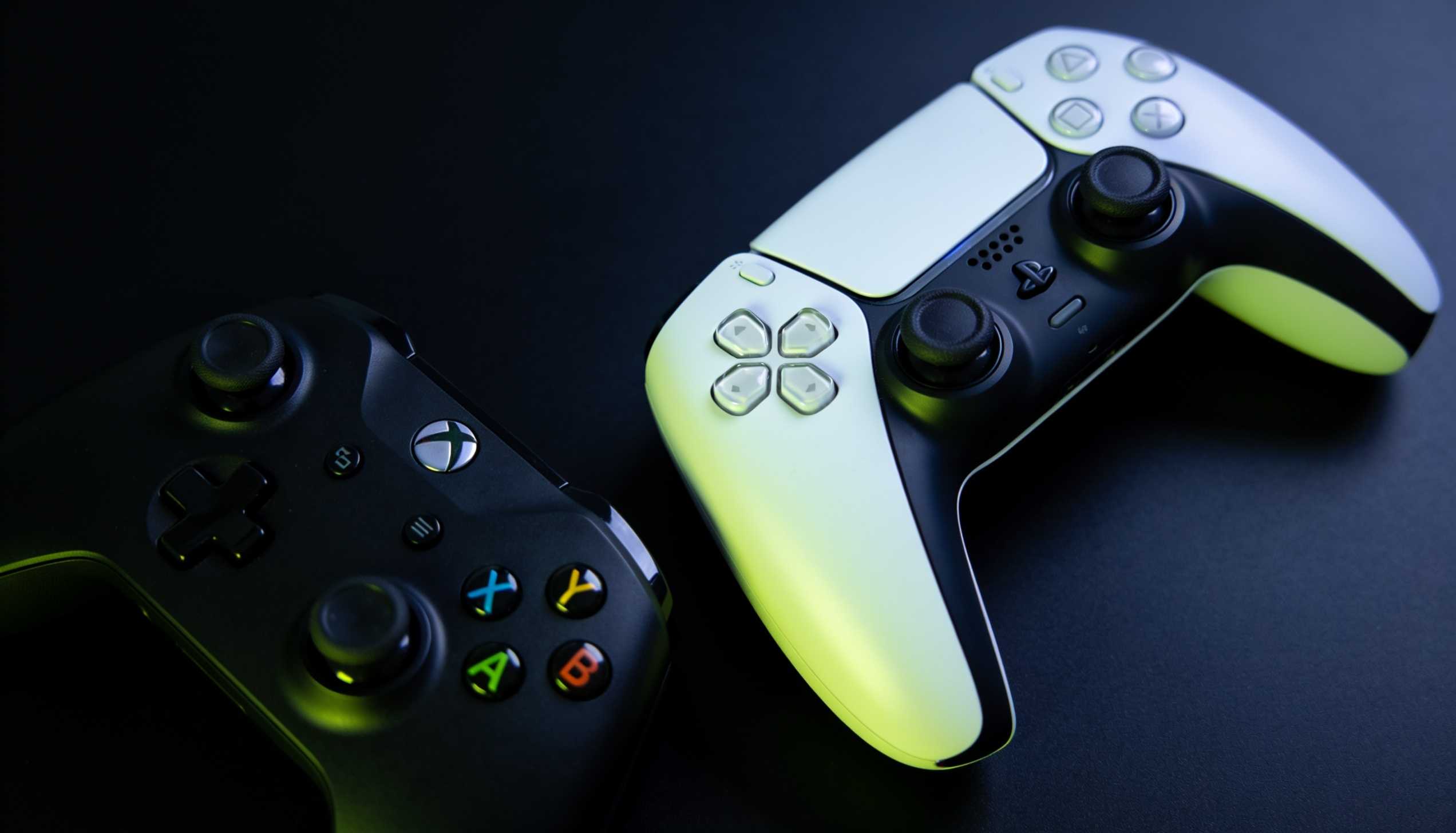
Second, the headroom. Native 4K targets, performance modes that actually hold their frame rate, and the DualSense controller, whose adaptive triggers are a genuine difference you feel in the first hour rather than a spec-sheet line.
Third, the disc drive. Physical games get traded, resold, and bought used at real discounts in India. If you buy two or three big releases a year on disc and resell them, the drive quietly refunds a chunk of the console’s premium over its lifetime.
The Game Pass math for Indian players
Game Pass is the Series S’s whole personality, so price it properly. In India, as of July 2026: Essential at ₹499 a month, Premium at ₹699, and Ultimate at ₹1,389. Ultimate is the one with day-one first-party releases, 400+ games, and cloud streaming.
Here’s the anchor that makes those numbers real: a single new AAA game in India costs ₹4,000 to ₹5,500. Ultimate for a full year runs ₹16,668, about the price of three new games, for a rotating library of hundreds plus every first-party release on launch day. If you’re the player who finishes one game and immediately wants the next, that math is close to unbeatable on a ₹35K console.
It flips for slow players. If you buy two games a year and play them for months (my PUBG habit says hi), a subscription is a tax, not a deal. PS Plus works the same way on the other side, with a catalog that’s solid but doesn’t get Sony’s first-party titles on day one. Subscriptions reward variety gamers and punish loyalists, on both consoles.
The India price mess nobody mentions
The PS5’s India pricing is boring and predictable: ₹54,990 for the Slim disc edition, ₹44,990 digital, with festival-sale dips of about ₹5,000 on Amazon and Flipkart. You can plan around it.
The Series S is another story. After Microsoft’s global price hikes and with official India retail running thin, street prices for the 512GB model swing from the old ₹34,990 MRP to absurd marketplace listings well above the PS5 digital edition. I’ve watched the same console vary by more than ₹15,000 across listings in a single week. If the Series S is your pick, buy only at or near MRP from a mainline retailer, and treat anything above ₹40,000 as a hard no; at that price the PS5 digital is simply the better machine.
Storage: the hidden cost on both sides
Both consoles will eventually ask for more storage. They ask very differently.
The PS5 takes a standard NVMe M.2 SSD, the same kind PC builders buy, from any brand that meets the speed spec. Competitive market, falling prices, easy install. The Series S traditionally wanted a proprietary expansion card at proprietary pricing, and while licensed alternatives have improved things, expanding an S still costs more per gigabyte than expanding a PS5. On a console whose entire pitch is “cheapest way in,” that stings, and with 364GB usable, you will feel it sooner than you think.
Coming from an Xbox One S? Read this bit
My One S still works. It’s also a museum piece in practice: current games either skip it or run in cut-down versions, and load times feel geological after the SSD generation. If you’re on One S or PS4 hardware today, the jump to either current console is bigger than any gap between them. The Series S is the cheapest ticket out, keeps your existing controller ecosystem and digital library, and boots the same games in a fraction of the time. That upgrade path is the strongest single case for the S that exists.
Who should buy which: the actual answer
Buy the Series S if you play on a 1080p or 1440p screen, you like sampling lots of games more than replaying one, your budget stops near ₹35,000, or you’re upgrading from an Xbox One and want the cheap, fast exit. Pair it with Game Pass Ultimate and it’s the best rupees-per-hour deal in Indian gaming.
Buy the PS5 if you own a 4K TV, Sony’s exclusives are on your list, you value discs for resale and lending, or you keep a console for six-plus years and want it to age slowly. The extra ₹20,000 buys headroom you’ll still be using at the end of the generation.
Buy neither if your library lives on one live-service game that runs on what you already own. A One S that plays your game tonight beats a new box that plays it slightly prettier next month. Upgrade when the games force you to, not when a comparison article does.
FAQ
Is the Xbox Series S worth buying in 2026?
Yes, with two conditions: you play on a 1080p or 1440p screen, and you can find it at or near its ₹34,990 MRP in India. Pair it with Game Pass Ultimate (₹1,389/month) and it delivers the widest game library available for the money. On a 4K TV or above ₹40,000, the PS5 digital edition is the better buy.
Can the Xbox Series S run games in 4K?
It outputs a 4K signal to your TV, but games render at a 1440p target (sometimes lower) and get upscaled. Media apps like Netflix do stream in real 4K. If native 4K gaming is the goal, that’s the PS5’s job, not the Series S’s.
Can I play PUBG on both PS5 and Xbox Series S?
Yes. PUBG: Battlegrounds is free-to-play on both consoles, with crossplay between PlayStation and Xbox players. Performance is comparable on both; neither console version matches the mobile game’s pace, and progress does not transfer between BGMI and console PUBG.
Which is better for Game Pass, PS5 or Xbox?
Game Pass is Xbox-only on console, and it’s the Series S’s biggest advantage: day-one first-party releases and 400+ games on Ultimate (₹1,389/month in India). The PS5’s PS Plus catalog is solid but Sony doesn’t put its new first-party games on it at launch.
The bottom line from someone who paid for both
The Series S is the best value in console gaming and the PS5 is the better console, and neither statement contradicts the other. Match the box to your screen and your playing style, not to a spec comparison. And if you’re still torn after all this, buy the PS5 disc edition; nobody I know regrets the extra headroom two years in, but plenty regret a storage-starved digital console on a 4K TV.
For how sensitivity and settings testing works on the mobile side of this site, start with the BGMI sensitivity method guide.
Leave a Reply